Projects

Propulsion systems, robotic hardware, and engineering research, from first principles to fabricated hardware.

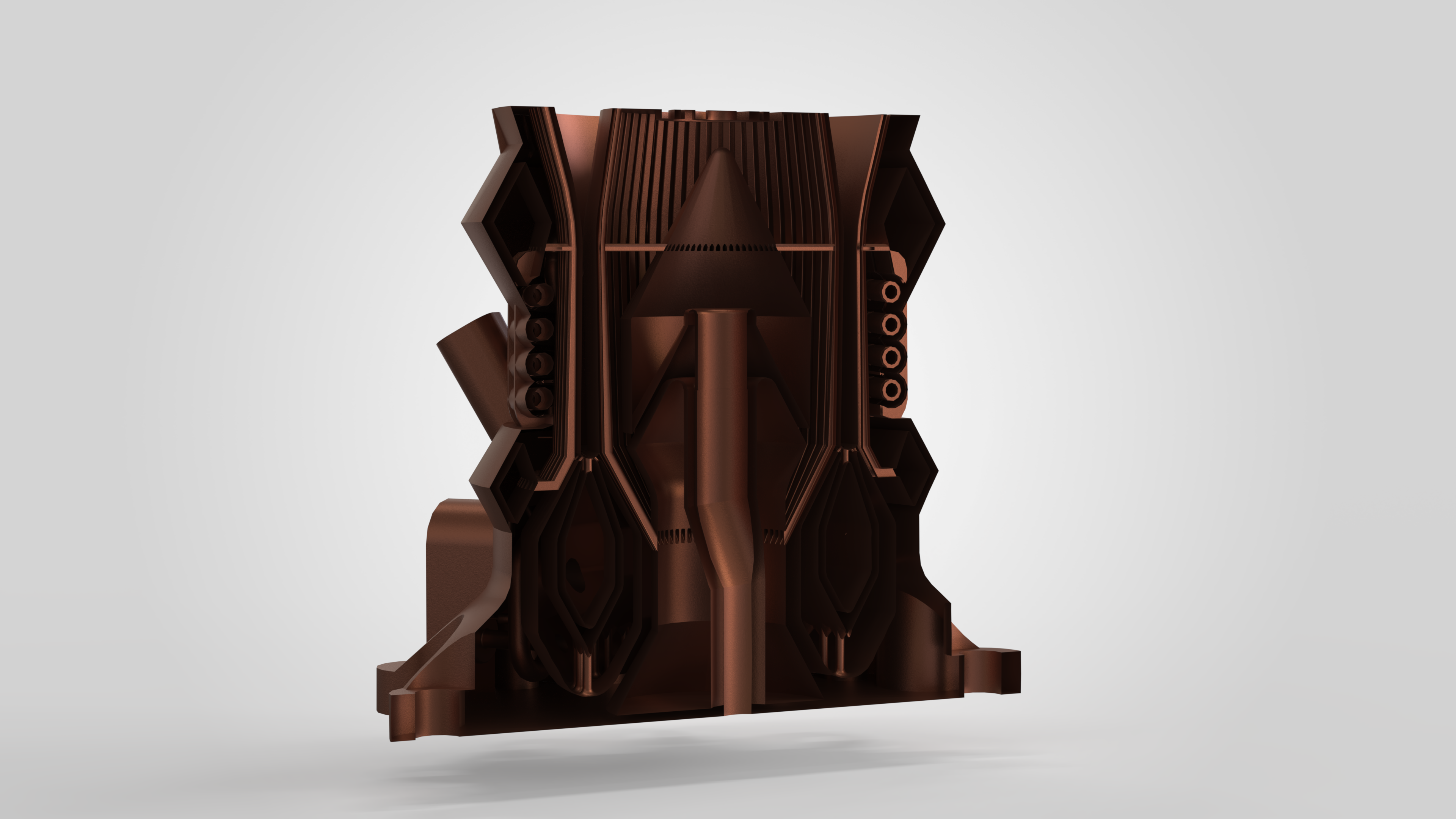
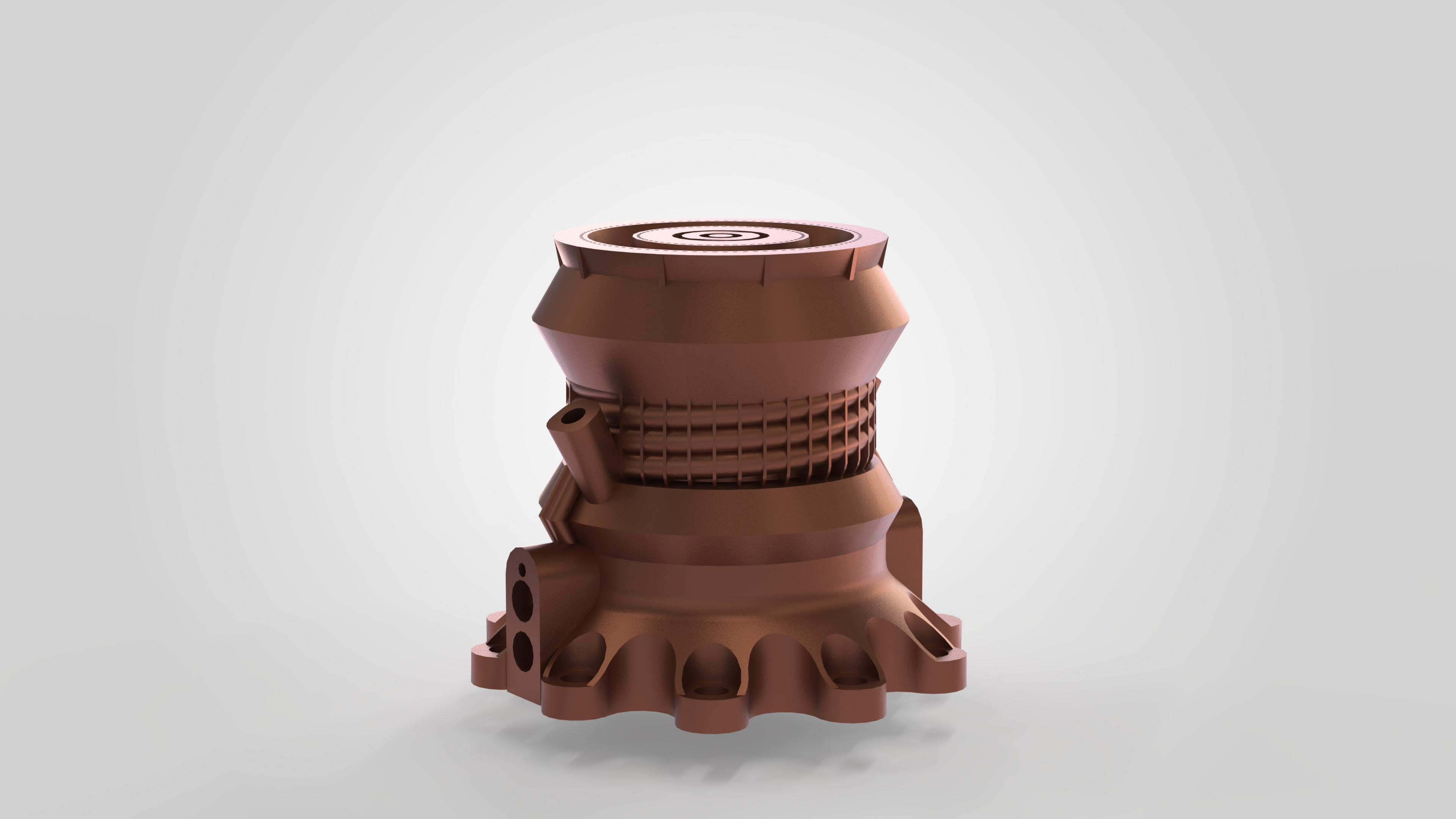
CAD-style annular chamber and injector illustration for a rotating detonation rocket engine

Rotating Detonation Rocket Engine

In spring 2026, I joined Project Wavefront, an undergraduate-led nonprofit advancing rotating detonation rocket engine technology focused on creating a student-designed, long-duration RDRE. As one of the team's primary CAD designers, I refine the engine's thermal-management system and translate cooling requirements into manufacturable components. Our team is currently finalizing a water-cooled configuration for an initial hot-fire test in fall 2026. Following testing, I will help transition the engine toward regenerative cooling while balancing thermal performance, fluid flow, structural integrity, and manufacturability.

Project link: projectwavefront.org

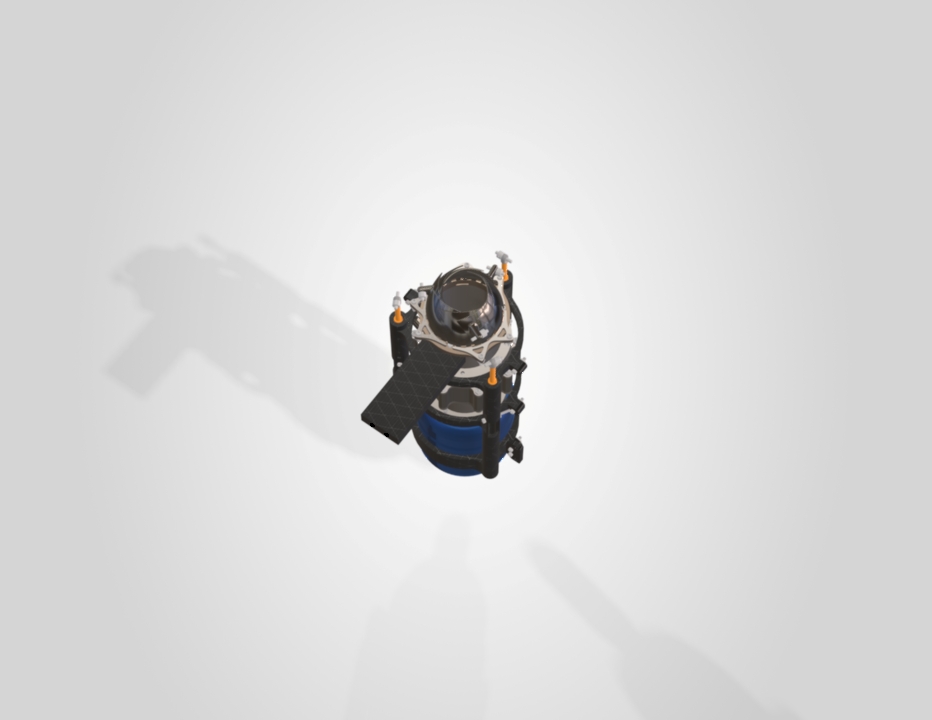
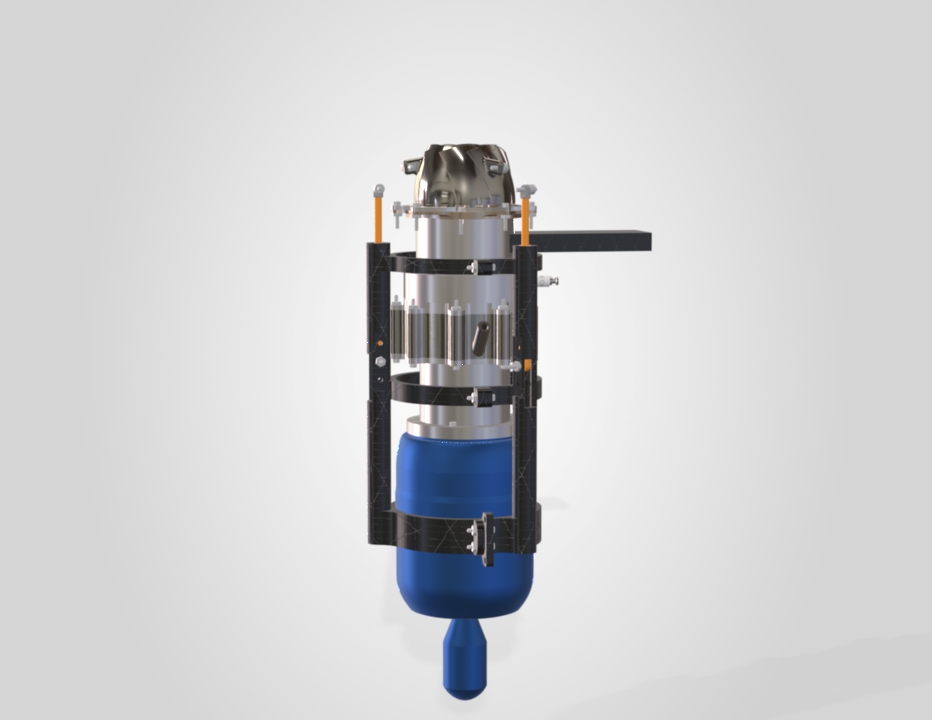
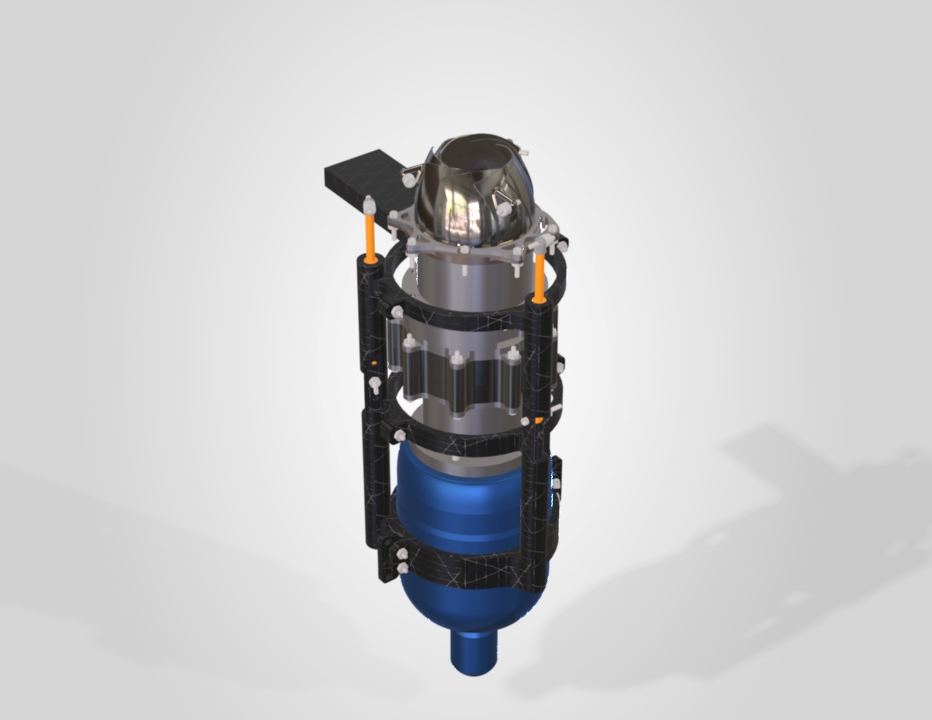
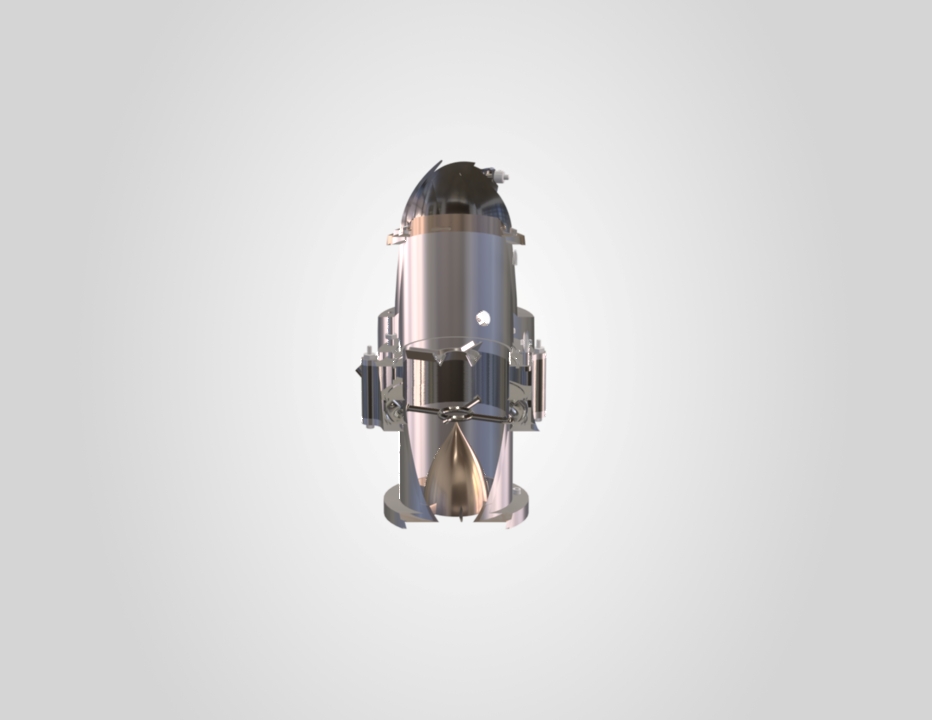
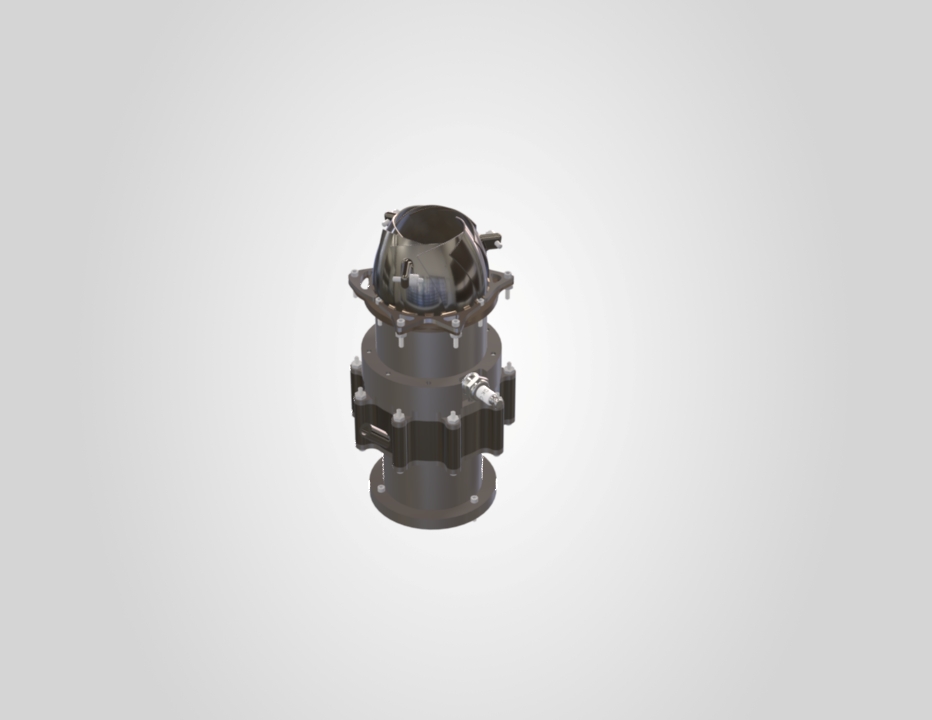
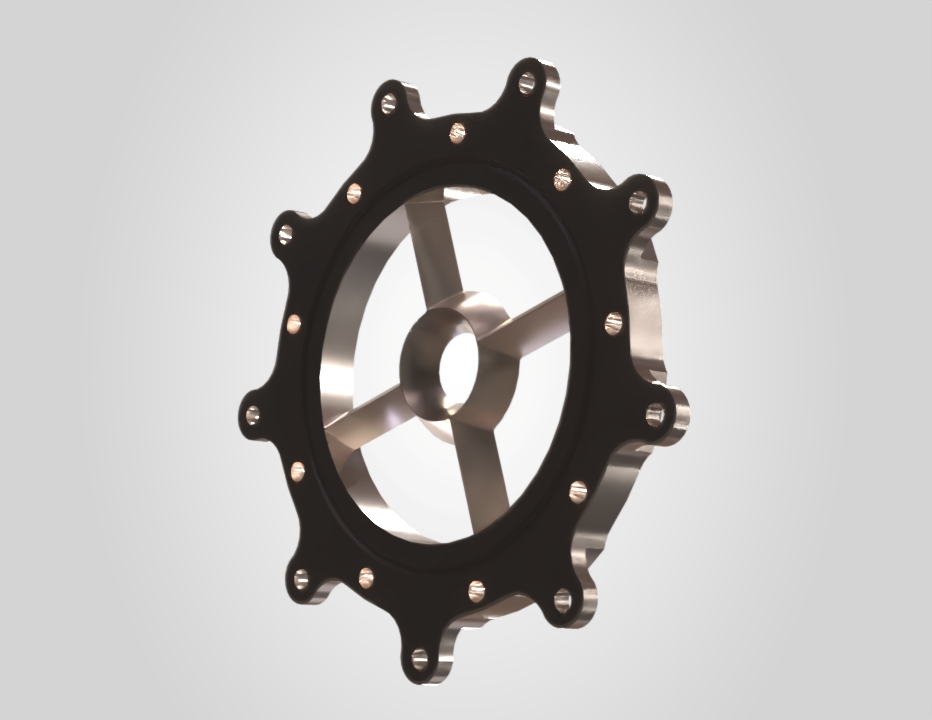
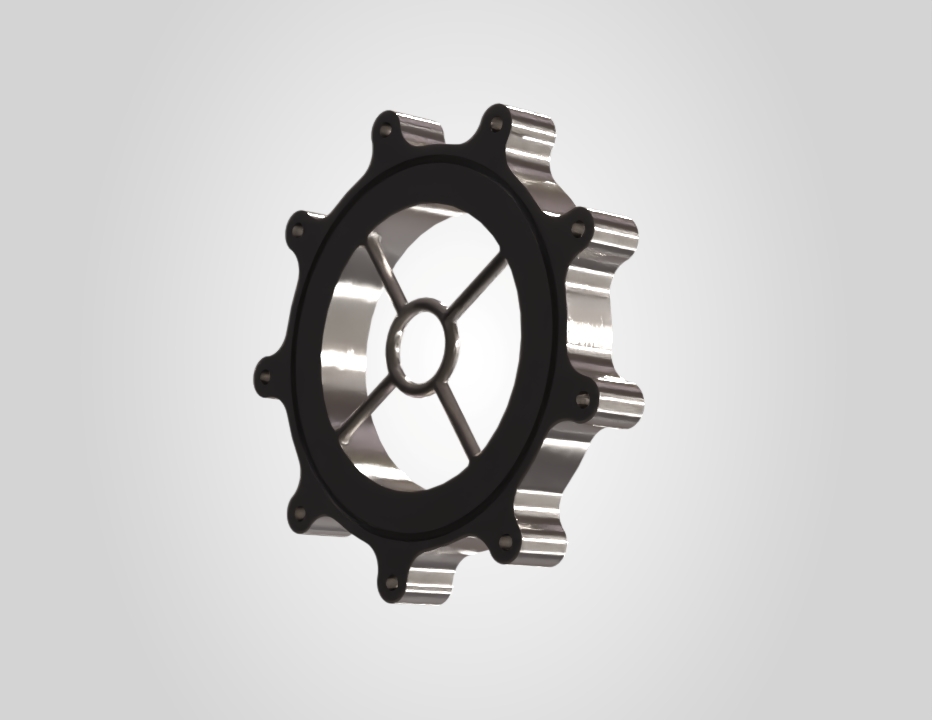
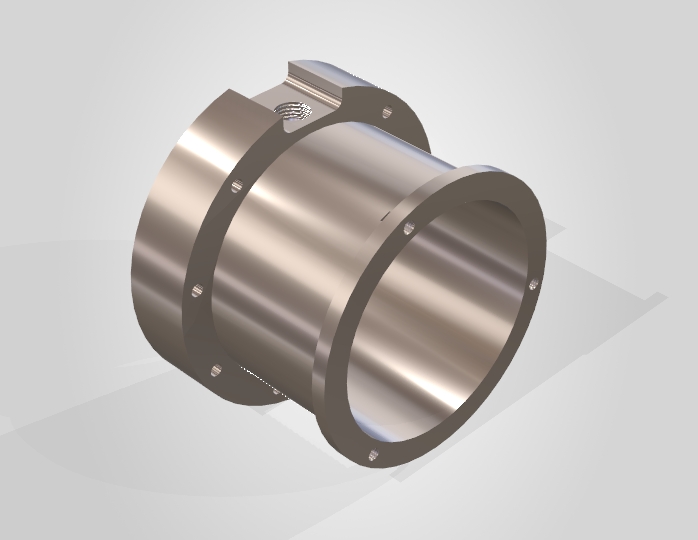
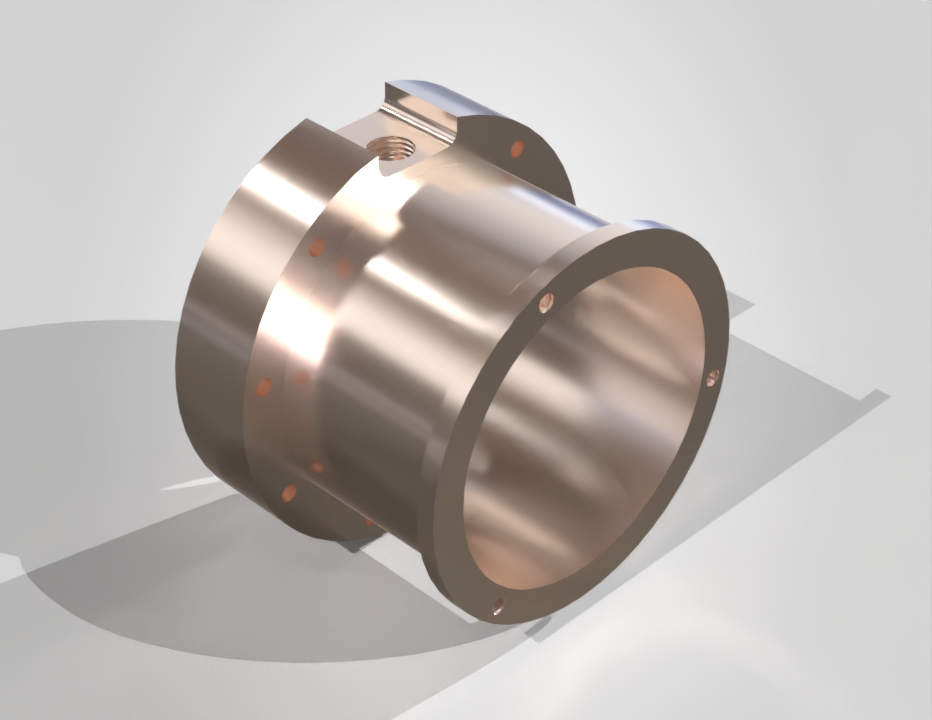
Cutaway technical illustration of a microturbojet afterburner chamber and flameholder

Afterburner for Microturbojet Engine

As a freshman, I was selected as Propulsion Design Lead for Penn Jet Propulsion's Research and Development team, where I led a group of undergraduate engineers developing an afterburner for a microturbojet engine. I guided the project from early concept development through detailed design and fabrication, with primary responsibility for the fuel-injection system, flameholder, ignition system, nozzle, and combustion-chamber geometry. Throughout the design process, I translated propulsion requirements into manufacturable CAD assemblies while balancing combustion stability, pressure loss, thermal loading, material limits, and fabrication constraints. The designs below highlight several of the components I developed while overseeing the project's mechanical architecture and subsystem integration.

Coming soon visual for the Big Hero Six Battle Bot project

Big Hero Six Battle Bot

During summer 2026, I began co-developing a walking robot with Maren Bradley, Yale Class of 2029, inspired by Hiro Hamada's battle bot from Disney's Big Hero 6. The robot is designed to achieve controlled locomotion, separate into detachable modules, and operate independently rotating arms. I am primarily responsible for the electronics, control architecture, and systems integration while also contributing to the mechanical design. My work includes selecting motors, sensors, power electronics, and embedded hardware, as well as coordinating interfaces between subsystems. The progress below documents our transition from early concepts and prototypes toward an integrated robotic platform.

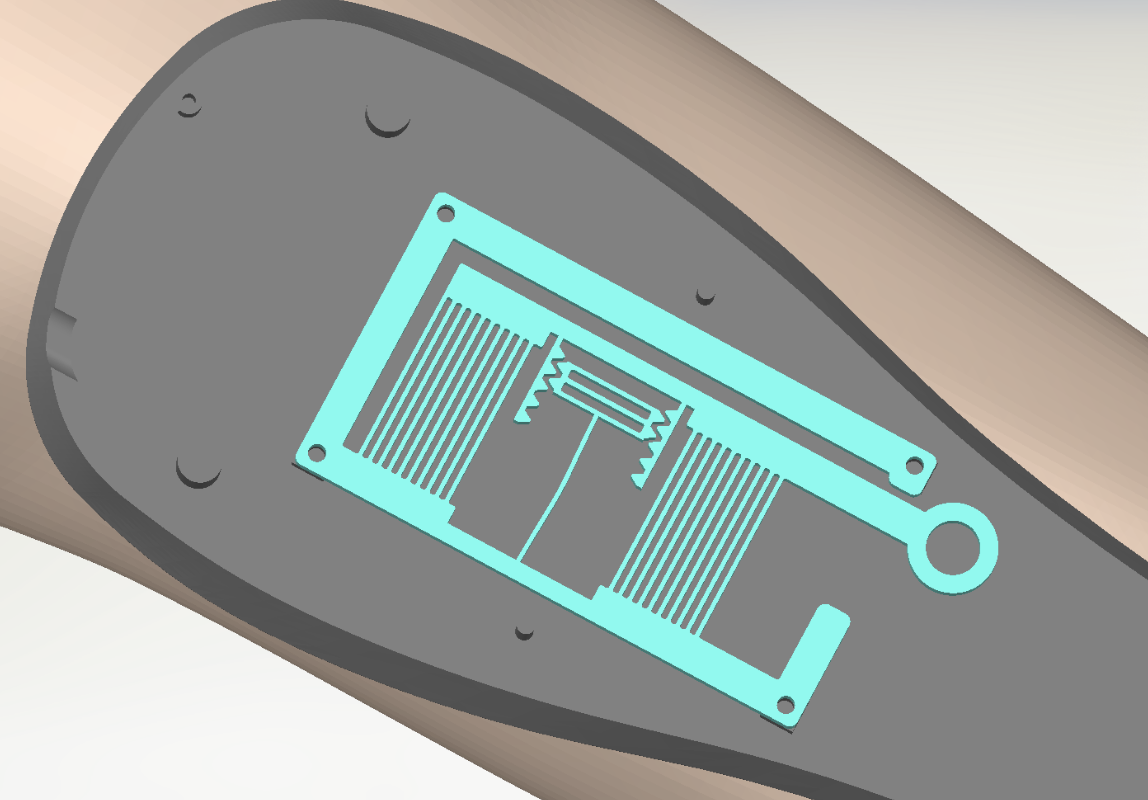
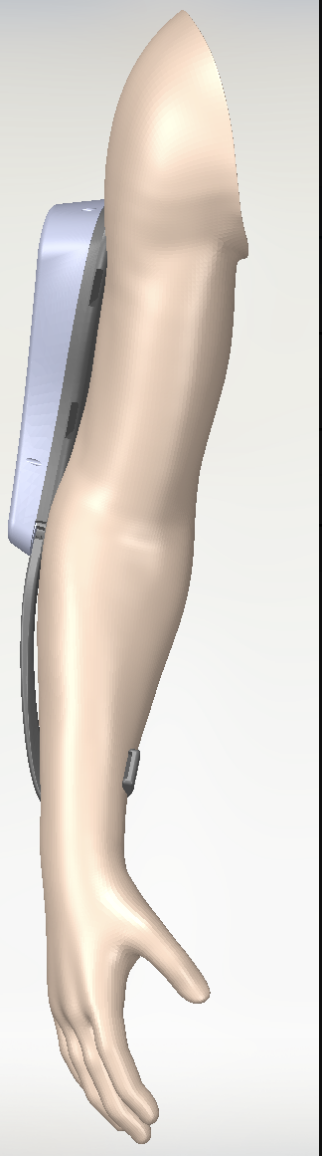
Assistive arm mechanism illustration with actuator and compliant linkage

ArmAssist

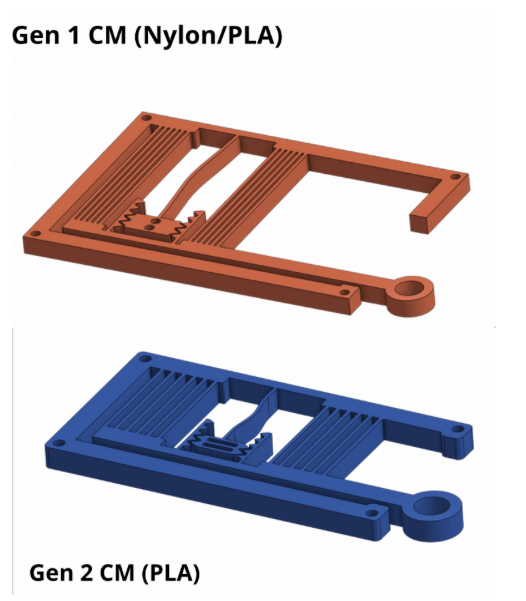
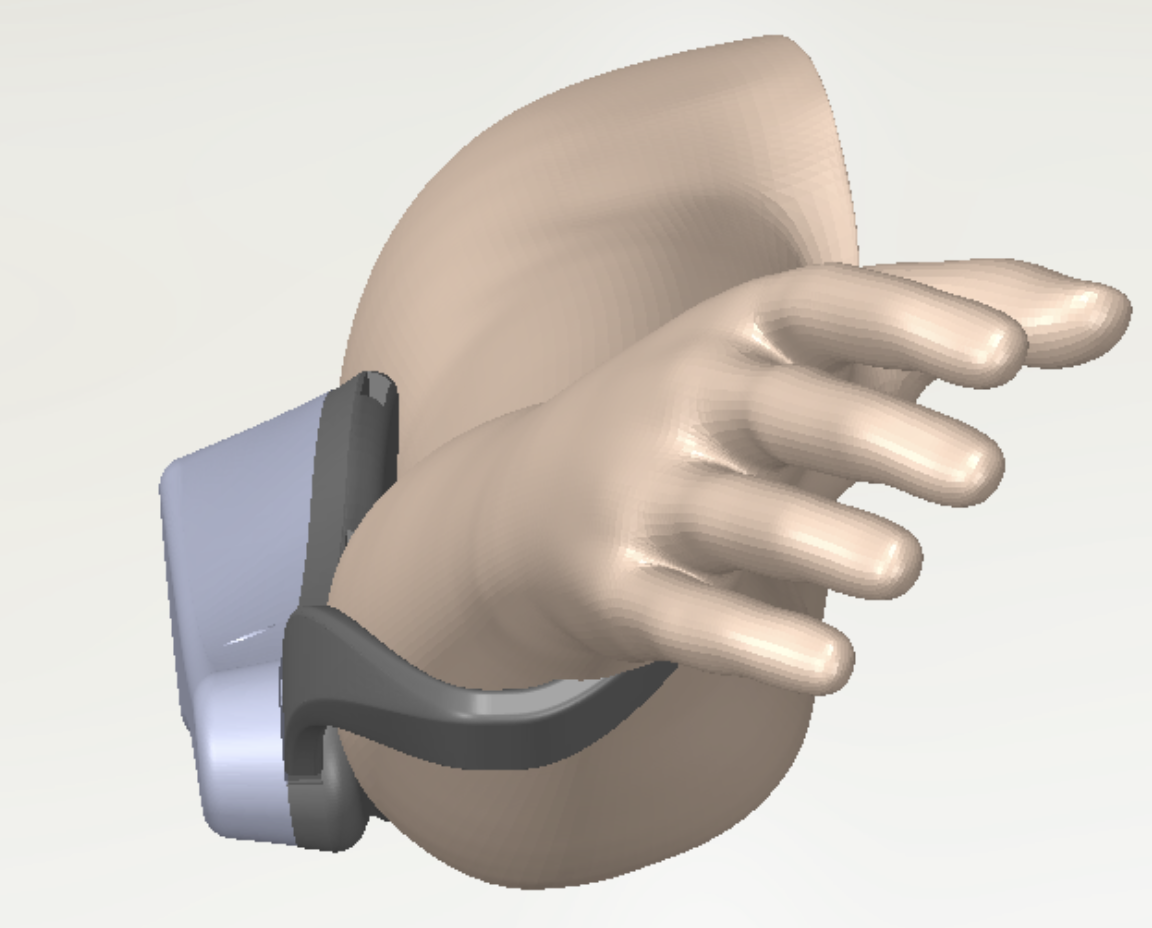
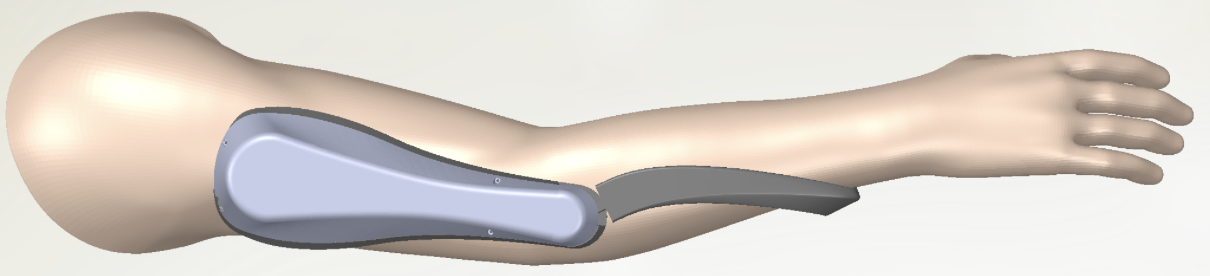
During high school, I spent two years co-developing ArmAssist with Henry Aceves, Johns Hopkins Class of 2029. ArmAssist is an upper-limb orthotic designed to reduce the muscular effort required to lift and manipulate objects. We initially fabricated custom artificial-muscle actuators from coiled Nitinol and nylon, but their high power requirements motivated a redesign. We then combined the actuators with an adjustable compliant mechanism that stored elastic energy to counterbalance the user's arm. An Arduino processed electromyography signals to detect user intent and adjust assistance. Through repeated iterations, we developed a more efficient system integrating custom actuation, mechanical energy storage, and intent-based control.

abstract link: View ArmAssist abstract

Research Projects

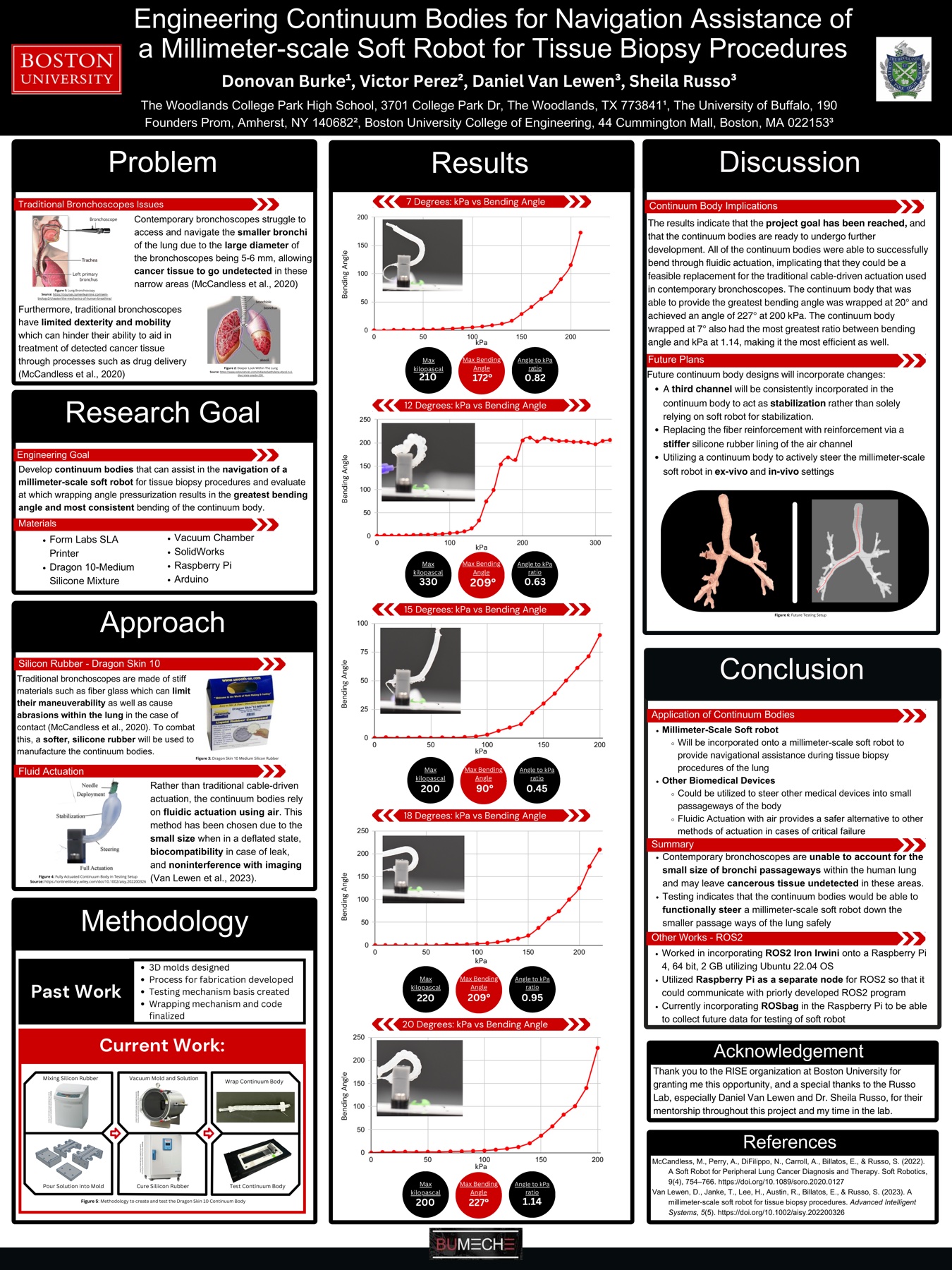
Material Science and Robotics Lab at Boston University

During summer 2024, I interned in Boston University's Material Science and Robotics Laboratory under Dr. Sheila Russo and PhD candidate Daniel Van Lewen. I developed soft continuum bodies to steer a millimeter-scale robotic bronchoscope through peripheral lung airways beyond the reach of conventional devices. I designed 3D-printed molds, established a repeatable Dragon Skin 10 silicone fabrication process, and built fiber-wrapping and pneumatic testing systems to study how reinforcement angles affected bending. Testing across multiple pressures produced a maximum bending angle of 227 degrees at 200 kPa, demonstrating the potential of fluidically actuated structures as compact, compliant alternatives to cable-driven bronchoscopic steering.

abstract link: View Boston University abstract

Mu Lab at the University of Iowa

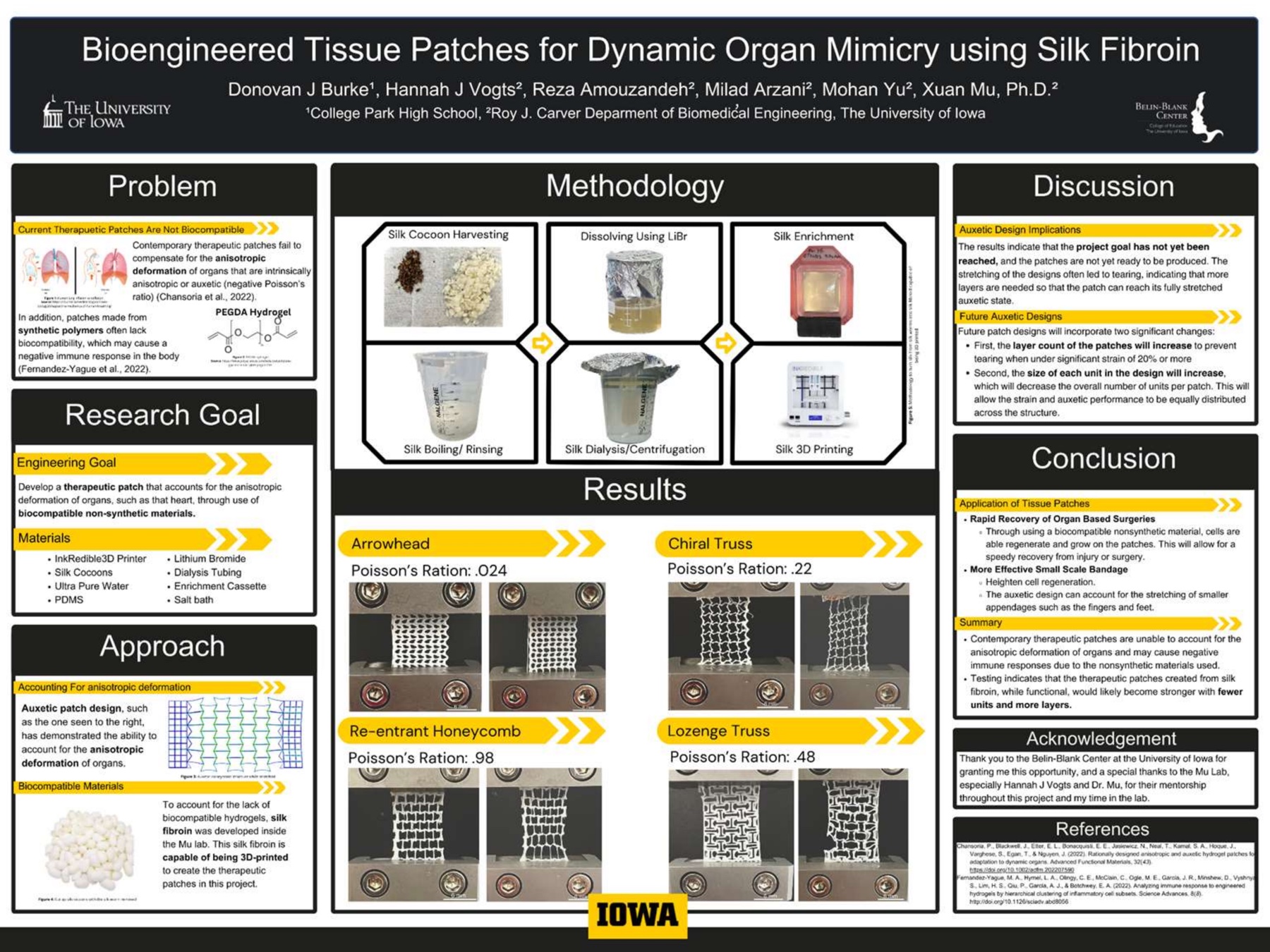
During summer 2023, I interned in the Mu Lab at the University of Iowa under Dr. Xuan Mu and undergraduate researcher Hannah J. Vogts. I designed and fabricated silk fibroin therapeutic patches intended to accommodate the anisotropic motion of dynamic organs such as the lungs and heart. Using extrusion-based 3D printing, I produced arrowhead, re-entrant honeycomb, chiral-truss, and lozenge-truss auxetic geometries, then mechanically tested their Poisson's ratios and deformation behavior. The arrowhead design achieved the lowest Poisson's ratio, while tearing at high strain informed recommendations for thicker prints and larger structural units. This work supported the development of adaptable, biocompatible patches for drug delivery, tissue regeneration, and postoperative healing.

abstract link: View University of Iowa abstract

Field water-quality sampling device and lake testing illustration

Jones State Forest Water-Quality Study

During high school, I led a team investigating eutrophication in two lakes within Jones State Forest. We collected water samples from ten locations across four rainy and non-rainy sampling periods to evaluate whether rainfall affected nutrient concentrations. Using aquatic chemistry test kits, we measured key water-quality indicators and developed an automated test-tube shaking device to standardize sample preparation. Results showed that both lakes remained within healthy environmental ranges, while statistical t-tests found no significant increase in nutrient concentrations following rainfall. The project strengthened my experience in environmental sampling, experimental design, statistical analysis, device development, and multidisciplinary team leadership.

Other Projects

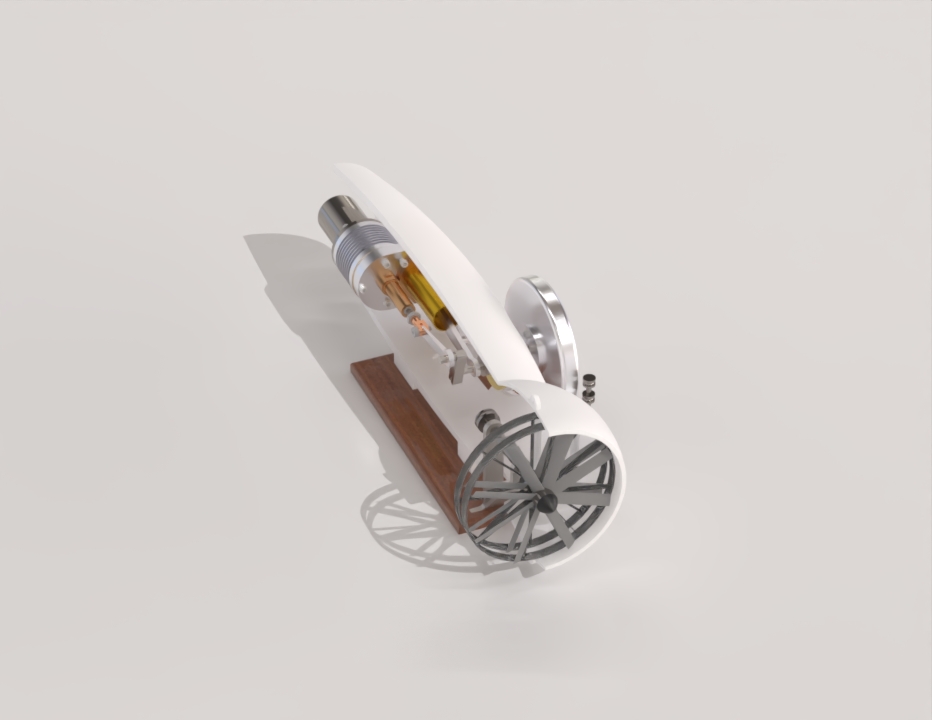
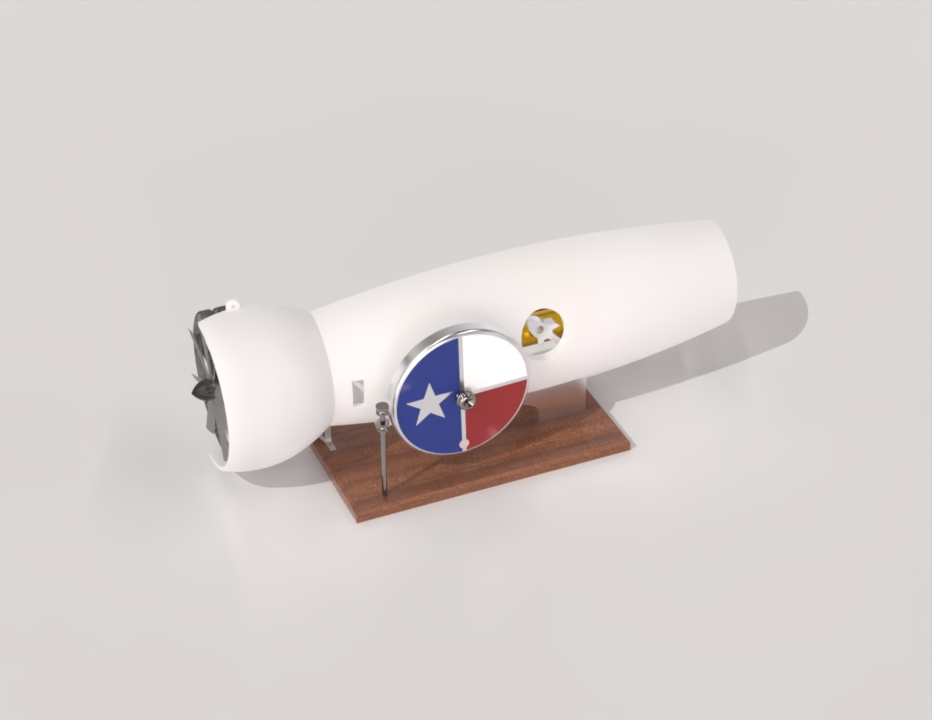
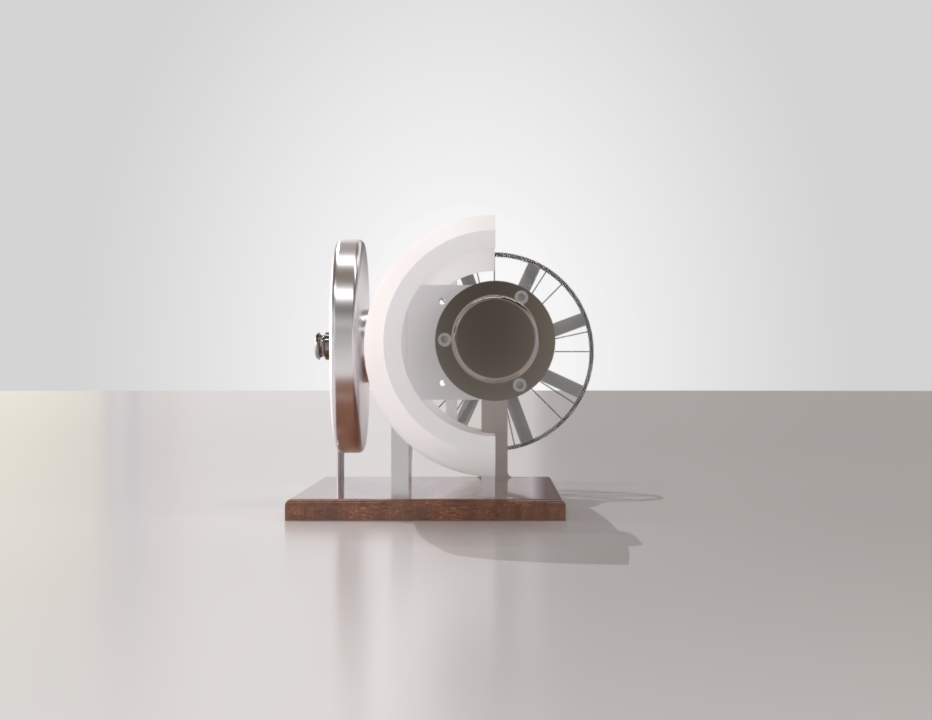
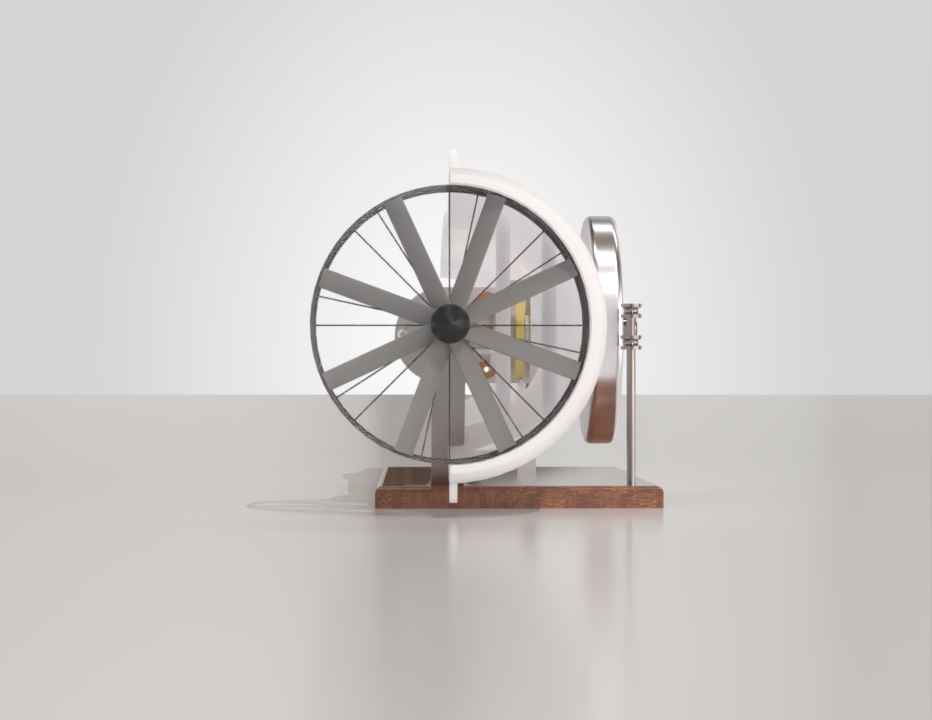
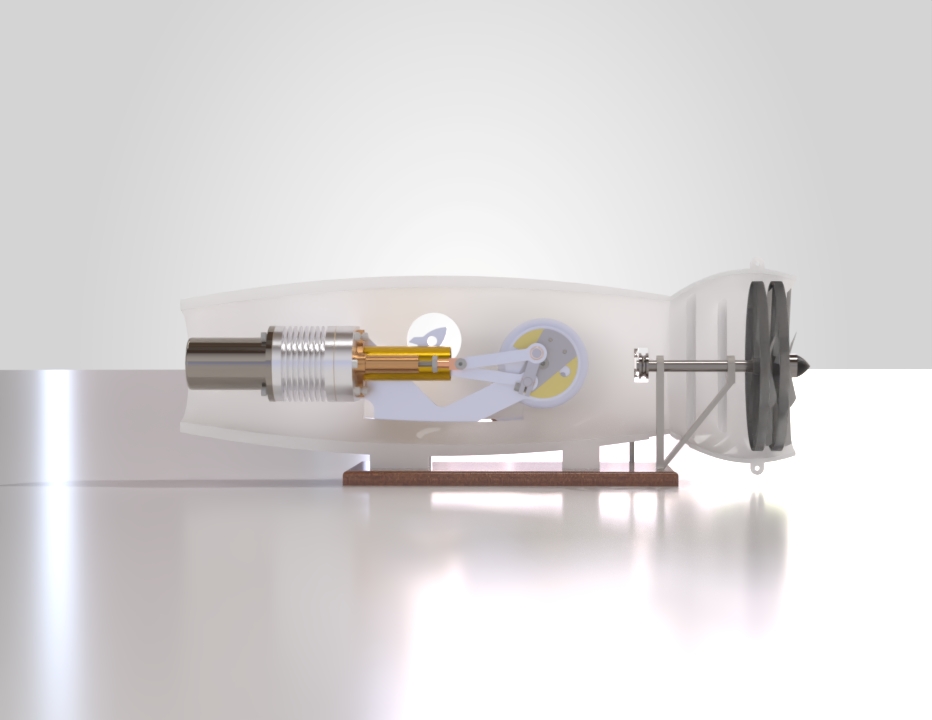
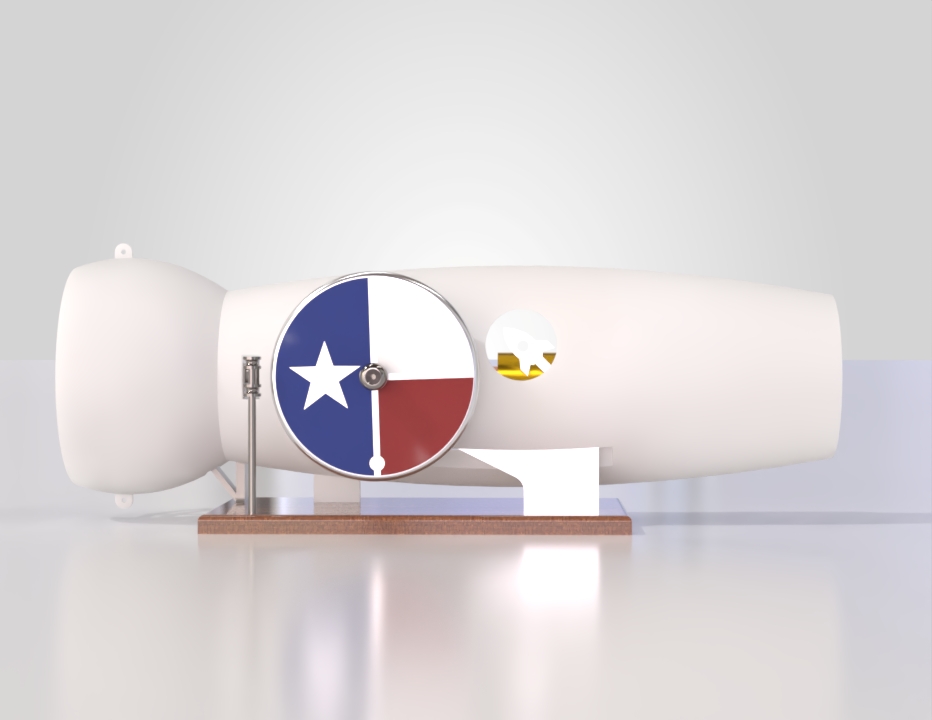
Coming soon visual for the Stirling Heat Engine project

Stirling Heat Engine

In fall of 2026, I will be creating a Stirling heat engine. Below is the progress and main checkpoints.

Mechanical siege machine launcher and release geometry illustration

Siege Machine

A mechanical launcher developed to study projectile motion, structural loading, energy storage, and repeatable release behavior.

Vibe Coding Projects

Image

CourtVision

CourtVision is a mobile-first tennis training app built to help players turn practice and match play into clearer feedback. I created the app through a rapid vibe-coding workflow, moving from concept to working interface by iterating on layout, user flow, and feature behavior. The app is designed to organize tennis performance data, surface patterns from sessions, and make improvement areas easier to understand. It combines practical athlete-focused design with fast prototyping, showing how AI-assisted development can turn a specific training problem into a usable software tool.

Workout Lock

A productivity app that blocks access to social media until the user completes a workout. The concept turns screen-time control into a physical accountability system, using exercise as the unlock condition.

Workout Lock app icon shown on an iPhone simulator home screen

Motivation

A daily motivation app designed to help users start the day with more direction. The app creates a simple morning touchpoint for encouragement, focus, and momentum before the day begins.